What It's Really Like Living in Italy as an American

No tourist brochure. No timeshare pitch. Just Pamela and Garry's honest truth about culture shock, community, and becoming an Ameritalian™.

What It's Really Like: The Honest Truth

Italy is slower. It's simpler. Sometimes it's frustrating. It's not built for convenience. You won't find a Target open at 11 p.m. You won't get next-day delivery. There is no call center ready to solve your problem in 10 minutes. Things take longer. Bureaucracy is real. Patience is not optional—it's required.

But here's what they don't tell you on Instagram: this country runs on people, not systems.

You need your barista to recognize you. You need your neighbor to teach you how recycling actually works. You need the pharmacist to explain prescriptions. You need the local shop owner to know you by name. Italy is a people-first, paper-based, passion-fueled place. The system doesn't serve you—but people will. That's the trade. You trade efficiency for connection.

Within your first year, something shifts. You'll start creating a new country in your mind. Not Italy. Not America. Something in between. A blend of U.S. efficiency and Italy's late dinners, long walks, and afternoons that linger. You'll love cappuccino more than coffee. You'll plan your day around the market opening hours instead of fighting them. You'll fall in love with the unrushed rhythm of it all.

You'll learn to live between cultures. Within yourself. This fusion—your ability to straddle both worlds, to love the best of both and laugh at the worst of both—this is your Ameritalian™ identity.

Where Americans Are Actually Living

There's no one right place. Where you live depends on what you're looking for. Here's where Americans actually end up—and why.

Big Cities

Rome, Milan, Florence, Bologna. Walkability. Culture. Airport access. Museums. Nightlife. Everything you expect from a major city. Cost: €1,000–€2,000/month.

Medium Cities

Ferrara, Lucca, Lecce, Treviso. Culture without chaos. Walkable. Still affordable. You get history and calm in the same place. Cost: €600–€1,200/month.

Villages & Countryside

Le Marche, Umbria, Piedmont, Abruzzo. Peace. Space. A real chance to slow down. This is where you feel the rhythm of rural Italy. Cost: €300–€800/month.

Geography matters. Different regions attract different Americans:

  • Beach lovers → Puglia (heel of the boot), Sicily, Liguria (Italian Riviera)
  • Mountain souls → Trentino, South Tyrol (the Alps with Italian culture)
  • Foodies → Emilia-Romagna (Parma, Modena, Bologna—the food capital)
  • Cultural explorers → Florence, Turin, Bologna (museums, art, history)
  • Budget-conscious → Southern Regions—Sicily, Calabria, inland Puglia
  • Digital nomads → Any medium city with fiber internet (most of them now)
Our story: We chose Ferrara. It's a 40-minute train ride to Bologna (major hub, good for traveling), you can bike everywhere, the historic center is car-free, and it's affordable without feeling remote. We get culture, walkability, fiber internet, and access to 3 airports. More importantly, we know our barista, our neighbors, and the pharmacist. That was the trade we wanted.

What Does It Actually Cost?

Here's the truth nobody wants to hear: it depends. A lot. On where you live. How you live. What you're willing to compromise on.

A one-bedroom apartment in central Rome costs more than a renovated farmhouse in Umbria. A coffee at a tourist café in Venice costs 5x what it costs at your neighborhood bar in Ferrara. Eating at restaurants every night is expensive everywhere. Cooking at home, buying produce at the market, and eating like a local? That's where the money equation changes.

Use Numbeo.com to see real cost breakdowns by city. Search your target city and compare: rent, groceries, dining, utilities, transportation. Get specific numbers before you decide.

Here's the mindset shift you need: You're not moving to Italy to save money. You're moving to live better. The question isn't "Can I afford Italy?" It's "What lifestyle do I want, and what does that cost?" Once you know your lifestyle, the price becomes clear.

Many Ameritalians work remotely for U.S.-based companies or clients. You earn American salaries and spend European costs. That math works. Others are partially retired, living on pensions or passive income. Some run location-independent businesses. The common thread: they've separated their income from their location. That's the real unlock.

Our Story — How We Got Here

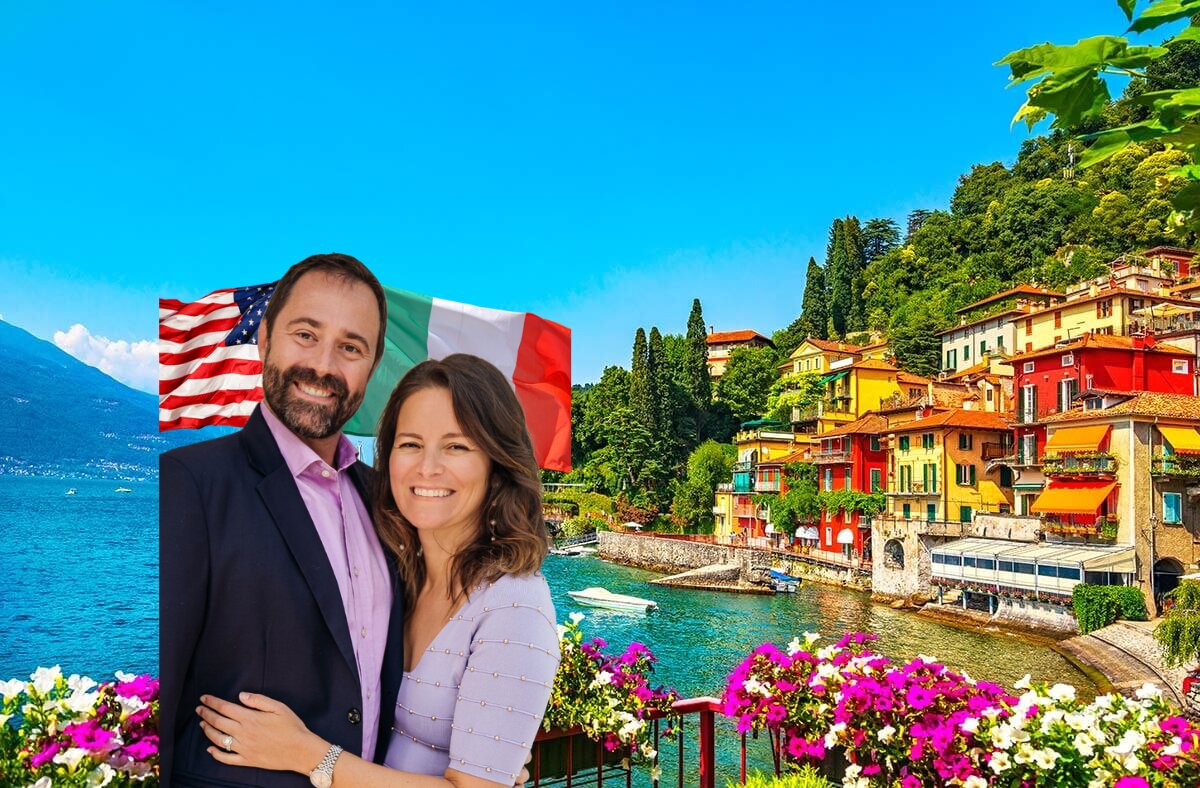
We're Pamela and Garry. We're two Americans who traded palm trees and concrete jungles for olive groves, cobblestones, and cappuccinos.

We started like everyone else: questions. Doubts. Excitement. Google tabs. What visa? Can I work remotely? Will my phone work? Can I get a mortgage as a foreigner? Does my dog need special paperwork? (Yes, she does.)

We didn't just move. We tested it first. We didn't just visit for two weeks and decide. We used our 90-day Schengen visa and lived—actually lived—in Ferrara for three months. We found an Airbnb, bought groceries at the market, navigated the healthcare system, made mistakes, learned the rhythm of the town.

After three months, we left (you have to, to reset your Schengen clock). We spent three months in Morocco, doing the same thing. Then we came back to the U.S. for two months to work, see family, reset. That was our pattern: 3 months in Italy, 3 months elsewhere, rotate. This is what we call the Schengen shuffle. It's how you test the lifestyle without the commitment. It's how you know if Italy is real for you or just a fantasy.

We always recommend starting small. Come for three months on your 90-day visa. Don't sign a year-long lease. Don't buy a house. Don't quit your job. Rent a furnished place, month-to-month if possible. Live like a local, not a tourist. See if you love it. See if you hate it. See what you love and what you hate about it.

After testing multiple cities and patterns, we made the leap to longer-term residency. We got our D visas (Italy's long-stay visa for self-employed people and remote workers). We found a permanent apartment. We got an Italian tax ID. We became official residents.

The Ameritalian™ life isn't something you just decide to do. It's something you test, refine, and commit to once you know it's real.
La Tua Casa — Find Your Perfect Place in Italy

La Tua Casa — How to Find, Rent or Buy Your Perfect Place in Italy

Finding the right home in Italy is not about price. It's about fit. About location. About understanding neighborhoods. About knowing the right people. That's exactly what we cover in La Tua Casa—the live training that teaches you how to navigate the Italian housing market like an insider.

Whether you're renting your first apartment in Rome or negotiating a purchase in Tuscany, you'll have a clear framework for making the decision that fits your life—not the fantasy.

Our Andiamo™ community has saved over €150K collectively by applying these principles. You don't have to learn this the expensive way.

ENROLL IN OUR NEXT WEBINAR →

— Garry & Pamela, The Ameritalians™